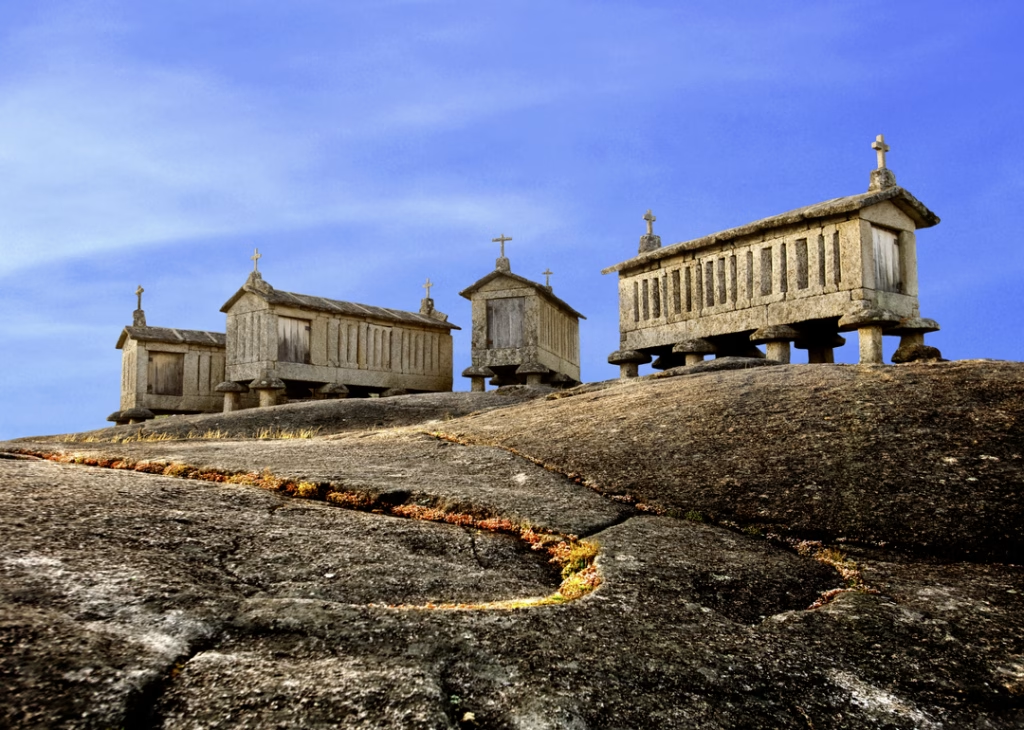
The settlement and social life of the lands of Valdevez are ancient. Prehistoric marks are confirmed archaeologically in built remains across the region — seen, for example, in the megalithic complex of Mezio (barrows and dolmens); in the rock art of the Gião archaeological site; or, most representative of the social and economic life of those times, the hillforts (“Castros”), common in our region, where the Celts also organised themselves along defensive lines.
The Romans passed through here too, as part of their imperial expansion — proof of their presence lies in the remains of the military camp at Alto da Pedrada. The Arabs, to a lesser extent, also left their historical mark from the times of the Christian Reconquest.
More recently, in the Middle Ages, the lands of Valdevez, the Alto Minho and Galicia were the stage for various political events and territorial interests, and the origin of a new nationality — one of the oldest in the world: Portugal.
The politics of the nobility and the power of the clergy were always closely tied to conflicts of interest, particularly territorial ones. It is around the 11th century that the foundations of a castle and defensive walls are thought to have been laid where the Paço de Giela now stands — the emblematic monument of Arcos de Valdevez — which was later the subject of several interventions until reaching its present state.

Around this time, too, the founding of the Ermelo monastery is attributed to the mother of our first king, D. Afonso Henriques, who donated the lands to a Benedictine religious order. This monastery is classified as a national monument, and it is here that, every year on 11 July, pilgrimages and the festival of São Bentinho de Ermelo take place, marking the municipal festival of Arcos de Valdevez in honour of its patron saint, São Bento.
Today the municipality of Arcos de Valdevez is a place of nature, of traditions and also of history, which brings to mind the historic slogan: Where Portugal was made.
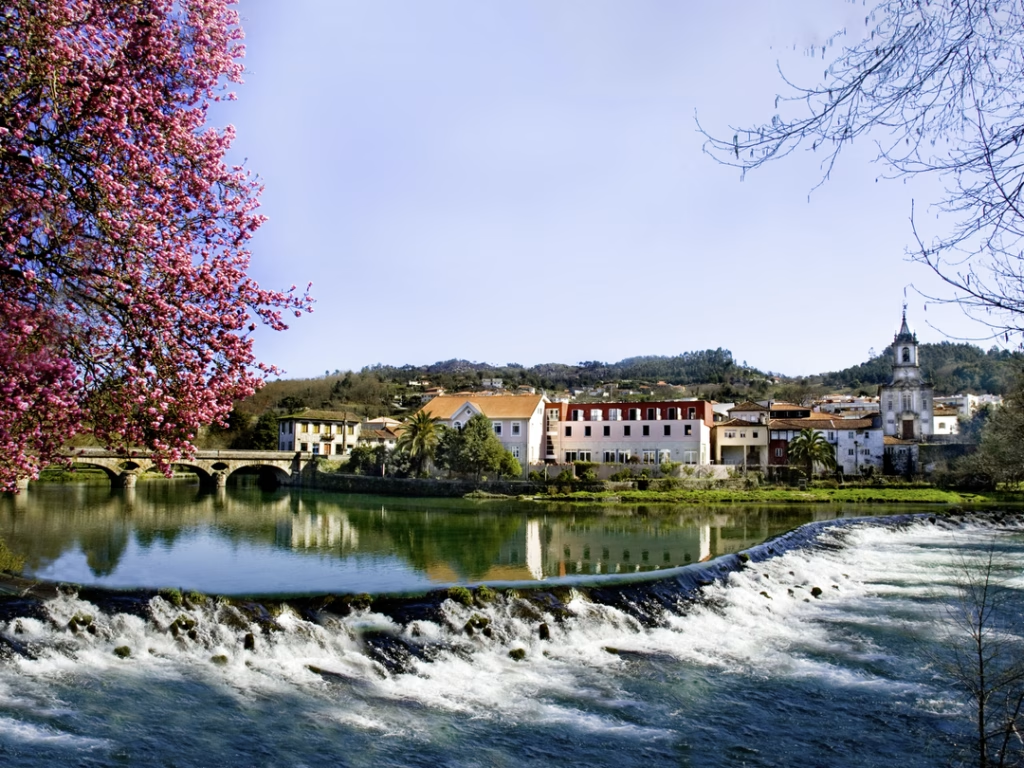
Carvalha House is located very close to the mouth of the River Vez, where it meets the River Lima, and we believe that our presence will become part of the history of this place, warmly welcoming all who visit us.
Visit our website: www.carvalhahouse.pt or our page on Facebook and Instagram. Follow us — we would love to surprise you.