It all starts with a question of survival and meeting the basic needs of the population: food. Corn (Zea Mays), originally from the Americas, arrived in the Iberian Peninsula in the 16th century, but its widespread cultivation in Portugal occurred in the following century. The Minho region, with its geoclimatic conditions and commitment to irrigated farming, was a pioneer in its adoption. The crop quickly flourished in northwestern Portugal. Previously, the staple cereal for the population was millet (small corn) and other cereals such as rye and wheat.
The introduction of large-grain corn caused a veritable “agricultural revolution” in northwestern Portugal. This cereal had a shorter growing cycle, greater productive potential, and the ability to coexist with other crops (such as beans and pumpkins in a polyculture system). Its large-scale adoption profoundly altered the agricultural landscape, eating habits (corn bread became dominant), and the social and economic organization of the Minho region.
Previous crops were mainly rain-fed, which allowed them to be grown in areas with steep slopes. Terraces were built to make the steep slopes of Minho productive, controlling erosion and the abundant water in this region.
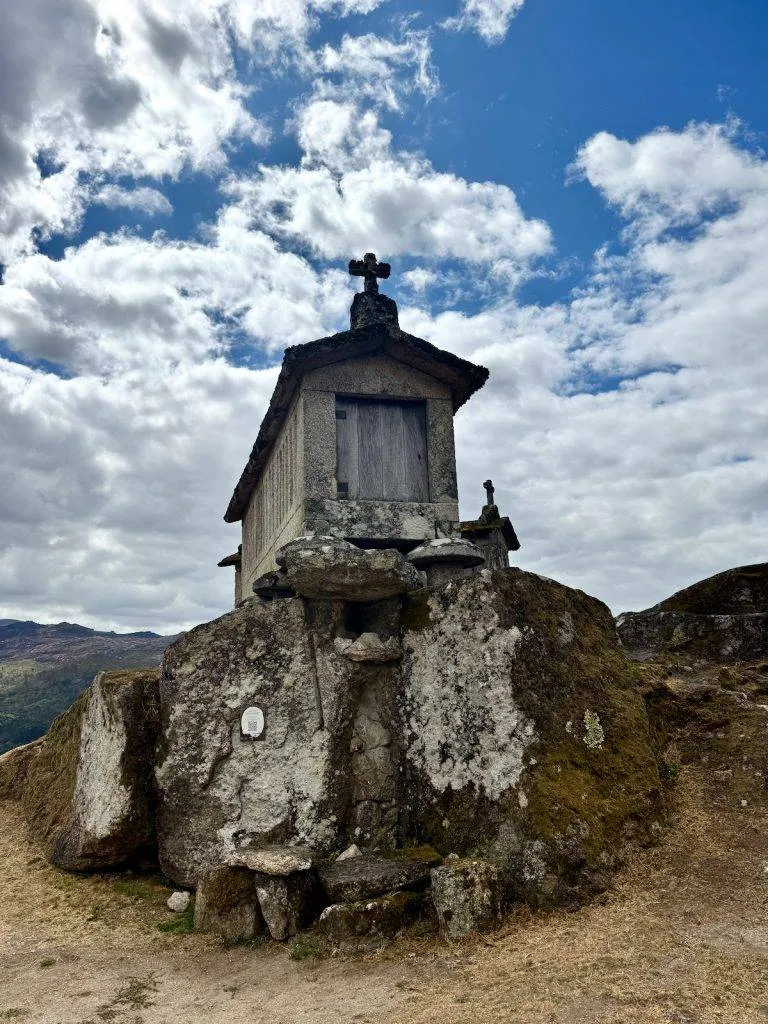
In addition to human consumption (production of cornbread), large corn was used to feed animals, and the straw had multiple uses, such as filling pillows and mattresses. The new crop allowed for a significant increase in population and food diversification, transforming the Minho landscape into a mosaic of cornfields alongside granaries for drying and storage.
Corn was so valuable that, in addition to architectural protection measures (such as raising the floor and using round millstones to prevent rodents from entering), local people attributed a sacred character and divine protection to granaries, as can be seen from the stone crosses on top of them, especially in the monumental complexes of Soajo and Lindoso.
These crosses were intended to invoke divine protection over the stored grain, which often represented the community's only means of survival during the year. Many granaries were (and are) for community use, located on shared threshing floors. This organization reinforced the idea of an essential good that needed collective and mystical safeguarding, in addition to physical security.
Granaries and terraces are interconnected elements of Minho's rural architecture, symbolizing self-sufficiency and agricultural organization, with the terraces producing the grains that the granaries stored, preserving production for the winter.
We invite you to relive this historical intensity at Carvalha House, with all the comforts of Carvalha Espigueiro accommodation, where you can share good times with that symbolic element and a history so real that it encapsulates the rich heritage of this region.